


 By guest - July 21, 2026
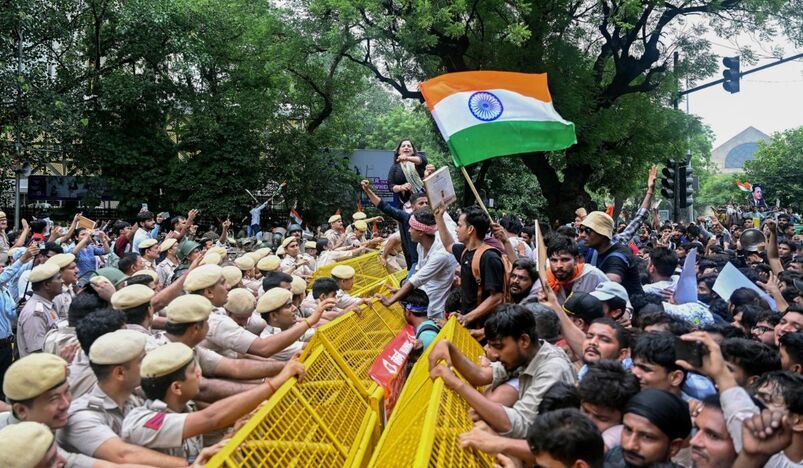
Delhi Police denied permission for a march to Parliament called by the youth-led Cockroach Janta Party (CJP) on Monday, the opening day of the monsoon session, setting up a tense standoff in central New Delhi as thousands of supporters gathered.
Police said the party had neither applied for nor been granted permission for the march. Deputy Commissioner of Police Sachin Sharma said no authorisation had been given for the CJP's planned march to Parliament on July 20. Under prohibitory orders issued using Section 163 of the Bharatiya Nyaya Sanhita, protests are restricted to the designated site at Jantar Mantar and require prior approval, with assemblies of five or more people, marches and demonstrations barred elsewhere.
The CJP, which has been protesting at Jantar Mantar since June 20, is demanding the resignation of Education Minister Dharmendra Pradhan over alleged exam paper leaks and examination irregularities. The movement is also seeking reforms and compensation for the families of students who died by suicide following the leaks.
Despite the denial, hundreds — and by some accounts thousands — of supporters gathered on Monday and tried to push past barricades ringing Jantar Mantar, a few kilometres from Parliament. Police used tear gas and batons to hold them back, according to news agencies and the protesters, in what was described as one of the most serious confrontations of the movement's campaign. Many demonstrators continued towards Parliament in small groups.
A CJP spokesman, Saurav Das, accused the authorities of cracking down on peaceful protesters. Delhi Police denied using force and said the protest was being handled professionally. Reuters journalists in the area reported hearing blasts but said they could not confirm that tear gas shells had been fired.
The movement gained momentum after police forcibly moved hunger-striking activist Sonam Wangchuk to hospital on Saturday. In a handwritten note, Wangchuk said he would end his nearly three-week hunger strike only if the government took responsibility for failures in the education system and the exam paper leaks, or if protesters were allowed to reach Parliament and lawmakers pledged to raise the issues in both Houses.
The protests have become a rare public challenge to Prime Minister Narendra Modi's government in its third term, drawing support from opposition parties, rights activists and some public figures. On Monday, the government appeared to make its first outreach to the movement's leaders.



_20-08-2026_05-08.jpg)
_27-51-2026_11-51.png)
_27-43-2026_12-43.png)



.jpg)
.jpg)



.jpg)


.jpg)
.png)
.jpg)









Leave a comment